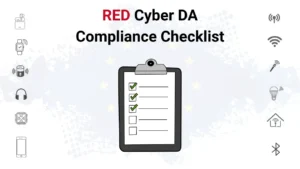
How to Check RED Cyber DA Compliance: Free Gap Analysis Checklist

Since 1 August 2025, the RED Cybersecurity Delegated Act (Cyber DA) has been mandatory for all wireless-connected devices sold in the EU. If your product is not compliant, it cannot be CE marked and therefore cannot be legally placed on the EU market. For managers and technical managers, the challenge is clear: ensure that […]
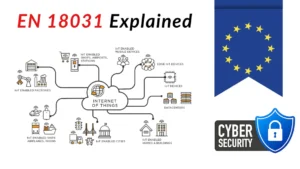
EN 18031 Explained: EU IoT Security Standard for RED

EN 18031 Explained: Meeting EU Security Standards for IoT Devices Wireless products that connect to the internet, handle personal data, or handle monetary value must meet the RED cybersecurity requirements. This comes from Delegated Regulation (EU) 2022/30 and its amendment that moved the due date to 1 August 2025. The EN 18031 series is […]
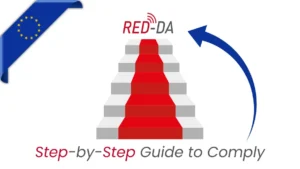
A Step-by-Step Guide to Comply With the EU RED Cyber DA (for Hardware Manufacturers)

As of 1 August 2025, the RED Cybersecurity Delegated Act (Cyber DA) is in effect . This means all wireless products sold in the European Union must now meet mandatory cybersecurity requirements. For hardware manufacturers, it’s a market access issue. Without compliance, your products cannot legally be sold in the EU. This guide walks […]
How to Comply an Existing IoT Device With RED Cyber DA Without Redesigning Hardware

The EU’s RED Cybersecurity Delegated Act (2022/30) comes into force in August 2025, making cybersecurity compliance mandatory for all internet-connected radio devices sold in the EU. This includes WiFi, BLE, and cellular-enabled devices, even if they are already CE-marked. At Oxeltech, we provide RED Cybersecurity compliance support for connected devices. Many clients ask: Do […]
What Every IoT Manufacturer Selling in EU Must Know About RED Cyber 2025

From 1 August 2025, the EU’s Radio Equipment Directive (RED) will enforce mandatory cybersecurity requirements for all internet-connected radio devices. This change affects nearly every manufacturer selling connected products, including those using WiFi, Bluetooth, or cellular technologies. What’s Changing? The RED Delegated Regulation (EU) 2022/30 activates Articles 3(3)(d), (e), and (f) of the directive. […]
RED Cybersecurity Compliance for STM32-Based IoT Device with WiFi Module for a German Manufacturer

In 2025, a German IoT company building low-power connected devices engaged Oxeltech to bring their product into compliance with the EU Radio Equipment Directive (RED) Delegated Act 2022/30, which mandates cybersecurity for internet-connected radio devices from 1 August 2025. The Product MCU: STM32F4 series Connectivity: External WiFi module via UART/SPI Functions: Periodic sensor data upload to the […]
From Prototype to Product: Steps to Launch Hardware That Ships

You’re only 30 to 40 percent done when your hardware design is functionally successful (i.e., your prototype works). Shipping a real product involves multiple interdependent steps across engineering, supply chain, compliance, and operations. Here’s a detailed breakdown from functional design to selling on eCommerce platforms: 1. Design Verification Even if your prototype works, you […]
SoC vs. SoM in Low-Power Devices

A SoC is a single chip that integrates key functions but requires external components, while a SoM is a ready-to-use module that includes a SoC plus supporting circuitry like power, memory, and RF, simplifying integration. The decision which one to use is a trade-off between full control (SoC) and faster deployment with lower RF risk […]
Six Steps to a New Hardware Solution (1 Minute Guide)

Six simple steps to get from idea to a production-ready electronics/embedded system, explained in less than 1 minute. 1. Understand product idea and requirements Understand which problem the device solves. Identify constraints such as cost, size, power, and battery life. List down all the requirements. 2. Component selection Select key components: microcontrollers (MCU), sensors, communication […]
Why Product Plans Fail in the Real World: Lessons from the Lab to the Assembly Line

When I was developing my first hardware product, we had planned for 2 hardware iterations. It took us 7. If you’ve built hardware before, you know the roadmap always starts out clean. Until reality hits. Things start breaking down as soon as you move from idea to development. And they continue through to production. […]