
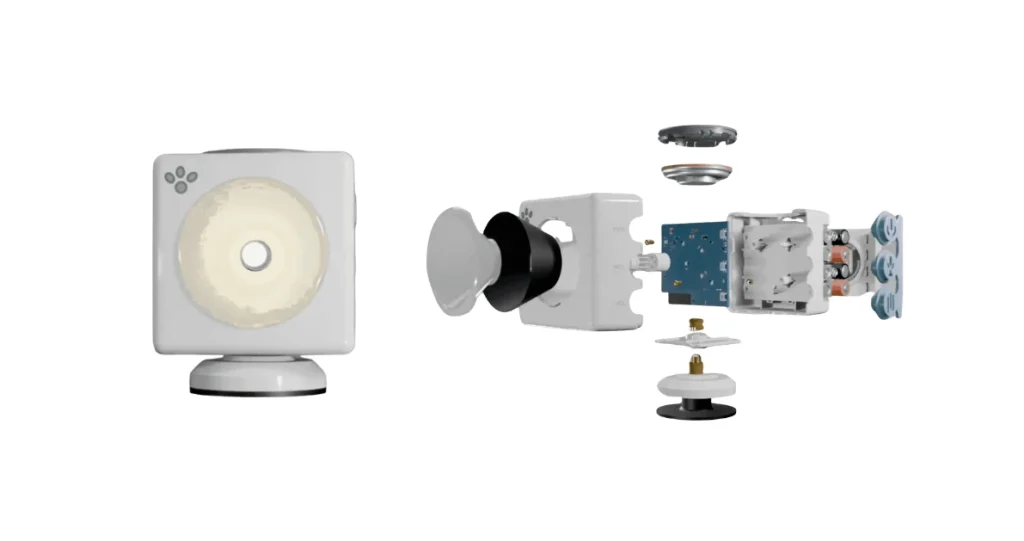
Overview
Bringing a hardware product to market in the United States requires FCC certification, a process that can be costly, time-consuming, and unpredictable if EMC considerations are left to the end.
Oxeltech designed the electronics for a wireless consumer device with FCC compliance built into every stage of development. The device passed the first lab submission.
Key Details
| Device Type | Wireless Consumer Device |
| Target Market | United States |
| Outcome | FCC Approved, First Submission |
Constraints and Challenges
Regulatory requirement: The device had to meet regulatory limits for EMC before it could legally enter the US market.
Certification risk: Every failed lab submission means a board re-spin, a new lab booking, and a delayed launch. Passing on the first attempt was the goal.
Antenna compliance: Using a custom antenna would require separate RF testing, increasing cost and uncertainty.
Technical Decisions
Radiated emissions: We optimized the PCB layout for RF shielding. Via stitching was added around sensitive areas. Trace routing was designed to minimize loop areas. Copper pours were placed to prevent traces from acting as unintentional antennas. Switching regulators were covered with a physical RF shield.
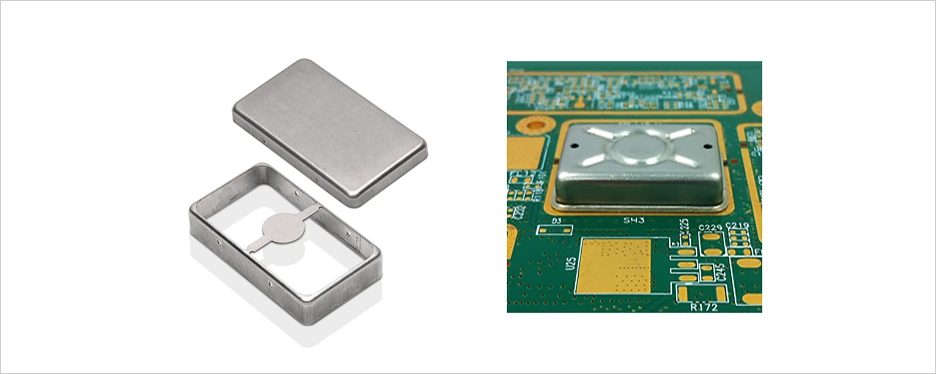
Figure: RF shield can on PCB.
Image Credit: masach.com
EM immunity: A common-mode choke was added on the power line. This suppresses conducted noise, improves immunity to external interference, and stabilizes power integrity.
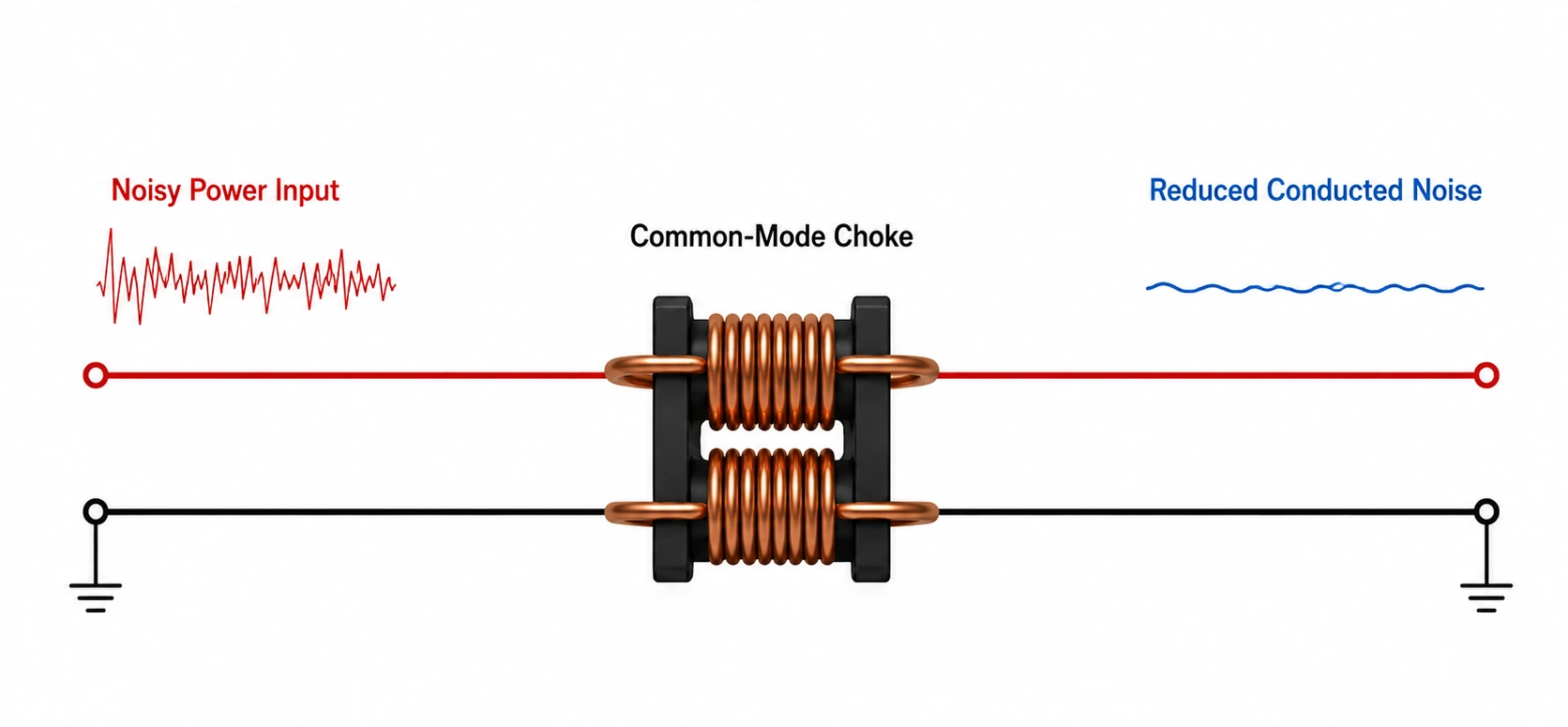
Figure: Common-mode choke reducing power line noise
Antenna integration: A pre-certified WiFi/BLE module was selected instead of a custom antenna. Placement and impedance matching were verified against FCC Part 15 and RED limits. This eliminated the need for custom antenna testing and reduced certification risk.
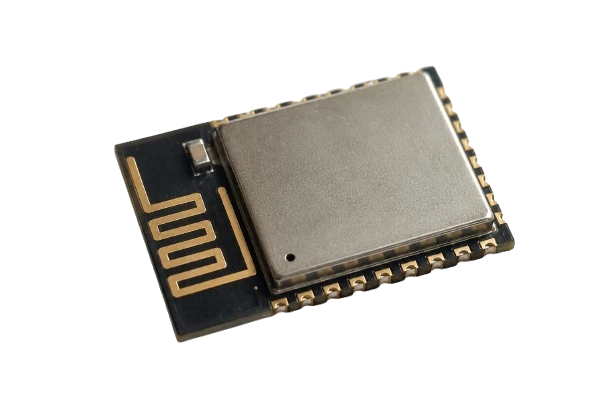
Figure: Pre-certified WiFi/BLE module
Results and Impact
The device passed FCC certification on the first lab submission. No re-spins. No additional lab bookings. No launch delay.
Board re-spin costs and lab re-booking fees were avoided entirely. The product entered the US market on schedule.
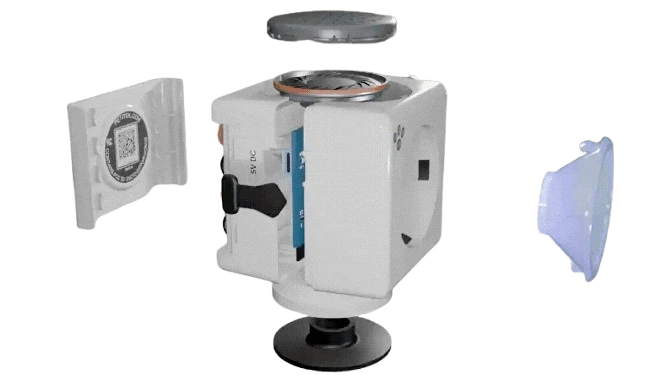
Figure: FCC-certified device assembly
Key Takeaways
- Radiated emissions failures are preventable with deliberate PCB layout decisions.
- A common-mode choke on the power line is a low-cost way to improve EM immunity.
- Pre-certified wireless modules reduce certification risk without compromising performance.
- Compliance built into the design from the start is faster and cheaper than fixing it after testing.
Case Study Summary
- Industry: Consumer electronics, wireless devices
- Core problem: Achieving FCC certification without failed submissions
- Solution: Compliance-first PCB design covering radiated emissions, EM immunity, and antenna integration
- Result: FCC approved on the first lab submission, product entered the US market on schedule
FAQ
What is FCC certification, and why does it matter?
FCC certification is mandatory for any electronic device sold in the United States that emits radio frequency energy. Without it, a product cannot legally enter the US market.
How long does FCC certification typically take?
Lab testing alone takes 5 to 14 days, depending on the device. The official review by a Telecommunication Certification Body (TCB) adds another 4 to 6 weeks. Any failed submission resets the clock. The full process typically takes 6 to 12 weeks.
Does Oxeltech also support RED certification for the European market?
Yes. Oxeltech designs with both FCC and RED requirements in mind. Many of the same principles apply to both standards, making it efficient to target multiple markets from a single hardware design.
Planning a wireless product that needs FCC or RED certification without costly resubmissions? Feel free to Contact Us for electronics design, PCB layout, and FCC certification support services.